
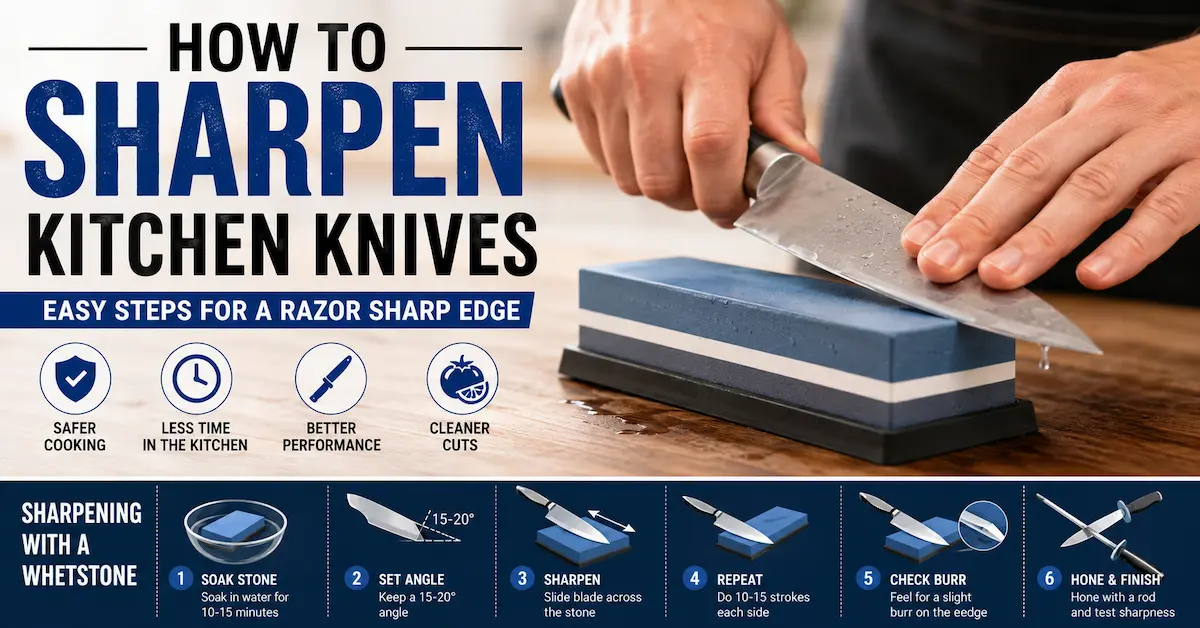
How to Sharpen Kitchen Knives (Quick Answer)
To sharpen kitchen knives properly:
- Use a 1000/6000 grit whetstone
- Hold the blade at a 15–20° angle
- Glide the knife evenly across the stone
- Sharpen both sides until a burr forms
- Finish with a honing rod or fine grit polish
This method creates a sharper, longer-lasting edge than most pull-through sharpeners.
Why Sharp Kitchen Knives Matter
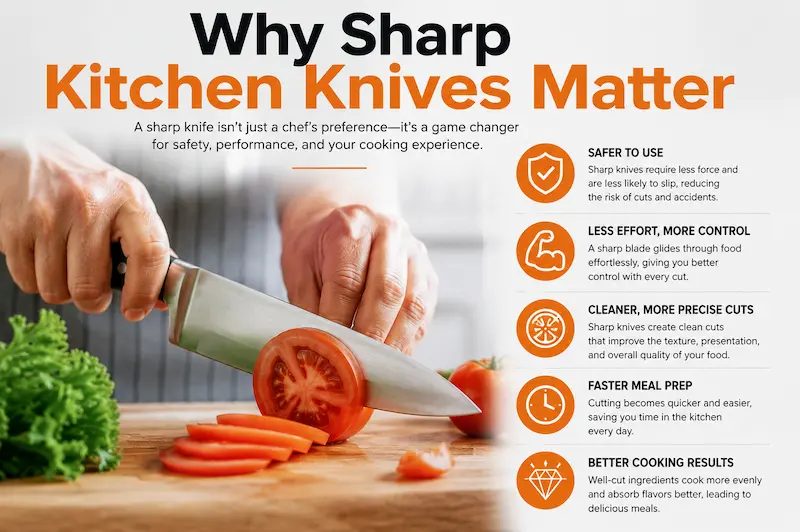
A sharp knife is safer, faster, and more precise.
Dull knives require extra force, which increases the chance of slipping while cutting vegetables, meat, or fruit.
Benefits of a Sharp Knife
- Safer cutting with less slipping
- Cleaner and more precise slices
- Faster food prep
- Better texture and presentation
- Less hand fatigue
Professional chefs sharpen their knives regularly because sharp blades improve both speed and control.
You may also like it:
How to Clean a Cast Iron Pan Rust: Easy Restoration Guide
How to Remove Nail Glue Safely: Easy Methods That Won’t…
How to Tell If Your Knife Is Dull
1. Paper Test (Best Method)
Try slicing a sheet of paper.
- Clean slice = sharp knife
- Tearing/snags = dull knife
2. Tomato Test
A sharp knife should cut through tomato skin effortlessly without crushing it.
3. Light Reflection Test
Hold the edge under bright light.
- Shiny spots = dull edge
- Dark thin line = sharp edge
4. Fingernail Test (Advanced)
Very lightly place the blade on your thumbnail.
- Slides = dull
- Slight grip = sharper edge
Honing vs Sharpening (Important Difference)
Many people think honing steels sharpen knives. They do not.
| Feature | Honing | Sharpening |
| Purpose | Realigns edge | Creates new edge |
| Removes Metal | No | Yes |
| Frequency | Weekly | Every 1–3 months |
| Tool Used | Honing rod | Whetstone/sharpener |
When to Use Each
- Use a honing rod regularly to maintain alignment
- Sharpen only when the blade becomes truly dull
Best Knife Sharpening Angle
| Knife Type | Angle |
| Japanese knives | 15° |
| Western knives | 20° |
| Cleavers | 25–30° |
Consistency matters more than perfect numbers.
Easy beginner trick:
90° → 45° → 20°
That helps estimate the correct sharpening angle.
Best Tools for Sharpening Kitchen Knives
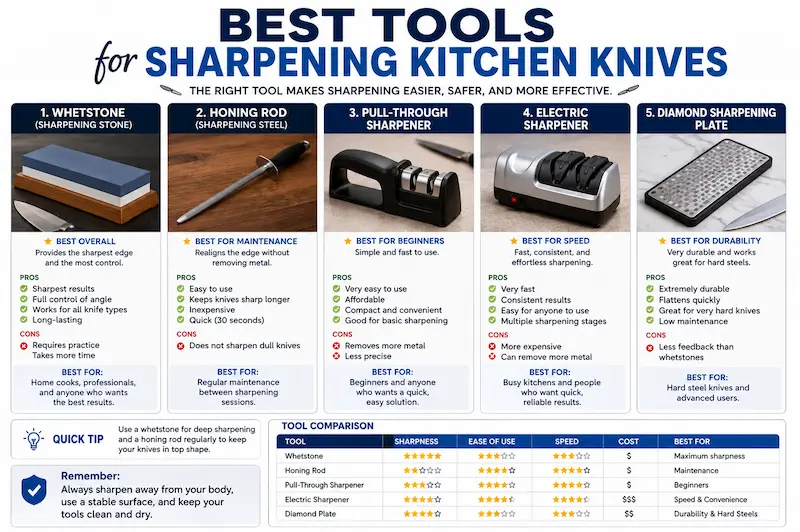
1. Whetstone (Best Overall)
Best for:
- Maximum sharpness
- Long-lasting edge
- Professional results
Pros
- Extremely sharp finish
- Full control
- Works on almost all knives
Cons
- Requires practice
- Takes more time
Recommended Grit
- 1000 grit = sharpening
- 6000 grit = polishing
2. Electric Knife Sharpener (Fastest)
Best for:
- Busy home cooks
- Convenience
Pros
- Fast results
- Easy for beginners
Cons
- Removes more metal
- Can shorten knife lifespan over time
3. Manual Pull-Through Sharpener (Easiest)
Best for:
- Casual use
- Quick touch-ups
Pros
- Affordable
- Simple to use
Cons
- Less precise
- Not ideal for expensive knives
Whetstone vs Electric vs Manual Sharpener
| Method | Sharpness | Ease | Best For |
| Whetstone | Excellent | Medium | Serious cooks |
| Electric | Very Good | Easy | Fast sharpening |
| Manual | Good | Very Easy | Beginners |
If you own premium knives, a whetstone is the best long-term option.
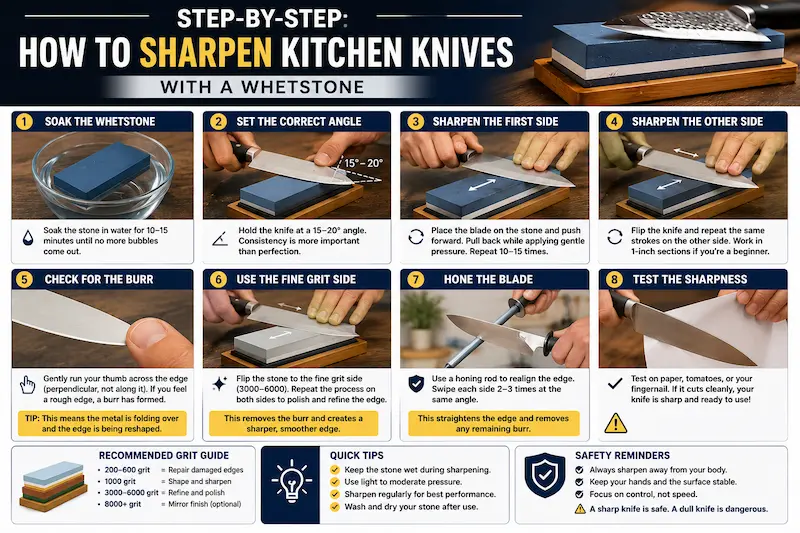
Step-by-Step: How to Sharpen Kitchen Knives With a Whetstone
What You Need
- 1000/6000 grit whetstone
- Bowl of water
- Towel
- Honing rod
- Knife
Step 1: Soak the Whetstone
Soak the stone in water for 10–15 minutes until bubbles stop appearing.
A wet stone creates slurry, which helps sharpen more effectively.
Step 2: Set the Correct Angle
Hold the blade at a consistent 15–20° angle.
Beginners should move slowly and focus on consistency instead of speed.
Step 3: Sharpen the First Side
y=0.27xy=0.27xy=0.27x
Slide the knife across the stone while applying light, even pressure.
- Push forward smoothly
- Maintain the same angle
- Sharpen from heel to tip
- Repeat 10–15 strokes
Many experienced sharpeners apply pressure only during the pulling motion to protect the edge and improve consistency.
Step 4: Form a Burr
A burr is a tiny raised edge that forms during sharpening.
Carefully check for it across the blade edge.
If no burr forms, continue sharpening.
The burr indicates the new edge is developing properly.
Step 5: Sharpen the Other Side
Repeat the exact same process on the opposite side.
Keep:
- pressure even
- angle consistent
- stroke count balanced
Step 6: Polish With Fine Grit
Flip to the 6000-grit side.
This refines and smooths the edge for cleaner cutting.
The blade should now slice paper and tomatoes effortlessly.
Step 7: Hone the Edge
Use a honing rod for 2–3 gentle passes per side.
This aligns the microscopic edge and improves smoothness.
Don’t skip reading it:
How to Preserve Flowers: 10 Easy Methods That Last
How to Attract Crows Complete Beginner-Friendly,…
How to Sharpen Knives Without a Sharpener
If you don’t have sharpening tools available, these methods can help temporarily.
Use a Ceramic Mug
The unglazed bottom ring acts similarly to a sharpening stone.
Use Fine Sandpaper
Attach sandpaper to a flat surface for emergency sharpening.
Use an Unglazed Plate or Bowl
Ceramic surfaces can create a usable edge in emergencies.
These methods work surprisingly well for temporary sharpening.
Common Knife Sharpening Mistakes
Avoid these major errors:
- Using inconsistent angles
- Pressing too hard
- Skipping the burr stage
- Sharpening too aggressively
- Using dry whetstones
- Cutting on glass or marble surfaces
- Pulling the blade too quickly
Most beginner sharpening problems come from inconsistent angles rather than lack of effort.
How Often Should You Sharpen Kitchen Knives?
| Usage | Sharpening Frequency |
| Light home cooking | Every 2–3 months |
| Frequent cooking | Monthly |
| Professional kitchen use | Weekly |
Honing can be done weekly or even daily for heavily used knives.
Best Grit for Knife Sharpening
| Grit | Purpose |
| 200–600 | Repair chips/damage |
| 1000 | Main sharpening |
| 3000–6000 | Polishing |
| 8000+ | Razor finish |
For most home cooks, a 1000/6000 combination stone is perfect.
Can You Sharpen Serrated Knives?
Yes, but they require different tools.
Use:
- Serrated sharpening rods
- Specialized sharpeners
Serrated knives usually stay sharp longer because only the tips contact the cutting surface regularly.
Can You Ruin a Knife by Sharpening It?
Yes — improper sharpening can damage a knife.
Common causes include:
- extremely low angles
- overheating with grinders
- cheap aggressive sharpeners
- uneven sharpening
Good sharpening removes only a small amount of metal.
Why Is My Knife Still Dull After Sharpening?
Usually because:
- the angle was inconsistent
- no burr formed
- pressure was uneven
- polishing was skipped
- the knife steel is damaged
Most sharpening failures happen before the burr stage is completed.
How to Keep Knives Sharp Longer
Smart Knife Care Tips
- Hand wash only
- Dry immediately after washing
- Use wood or plastic cutting boards
- Store knives in guards or magnetic strips
- Hone regularly
- Never scrape food with the blade edge
Proper storage alone can dramatically extend edge life.
Signs Your Knife Is Perfectly Sharp
Your knife is sharp when it:
- slices paper cleanly
- cuts tomatoes effortlessly
- glides through onions smoothly
- requires minimal force
- feels precise and controlled
Expert Tips for Razor-Sharp Results
- Let the stone do the work
- Sharpen slowly before speeding up
- Keep the angle consistent
- Use a combination whetstone
- Practice on cheaper knives first
- Hone regularly between sharpenings
After testing multiple sharpening methods, a 1000/6000 whetstone consistently produces the best balance of sharpness, edge retention, and control for home kitchens.
Final Thoughts
Learning how to sharpen kitchen knives is one of the most valuable kitchen skills you can develop.
Sharp knives:
- improve safety
- speed up prep work
- create cleaner cuts
- make cooking more enjoyable
With a good whetstone and consistent technique, even beginners can achieve professional-level sharpness at home.
Start slowly, focus on angle consistency, and your knives will stay razor-sharp for years.
FAQs
What is the best way to sharpen kitchen knives?
A whetstone is the best method for achieving precise, long-lasting sharpness.
Are dull knives dangerous?
Yes. Dull knives require more pressure and are more likely to slip.
How long does sharpening take?
Usually 10–20 minutes per knife.
Can beginners sharpen knives at home?
Yes. Most beginners can learn basic sharpening with practice and proper technique.
Do chefs use whetstones?
Yes. Professional chefs often prefer whetstones because they provide maximum control and superior sharpness.
Is honing the same as sharpening?
No. Honing realigns the edge, while sharpening removes metal to create a new edge.
What is the best whetstone grit for beginners?
A 1000/6000 grit combination stone is ideal for most beginners and home kitchens.
