
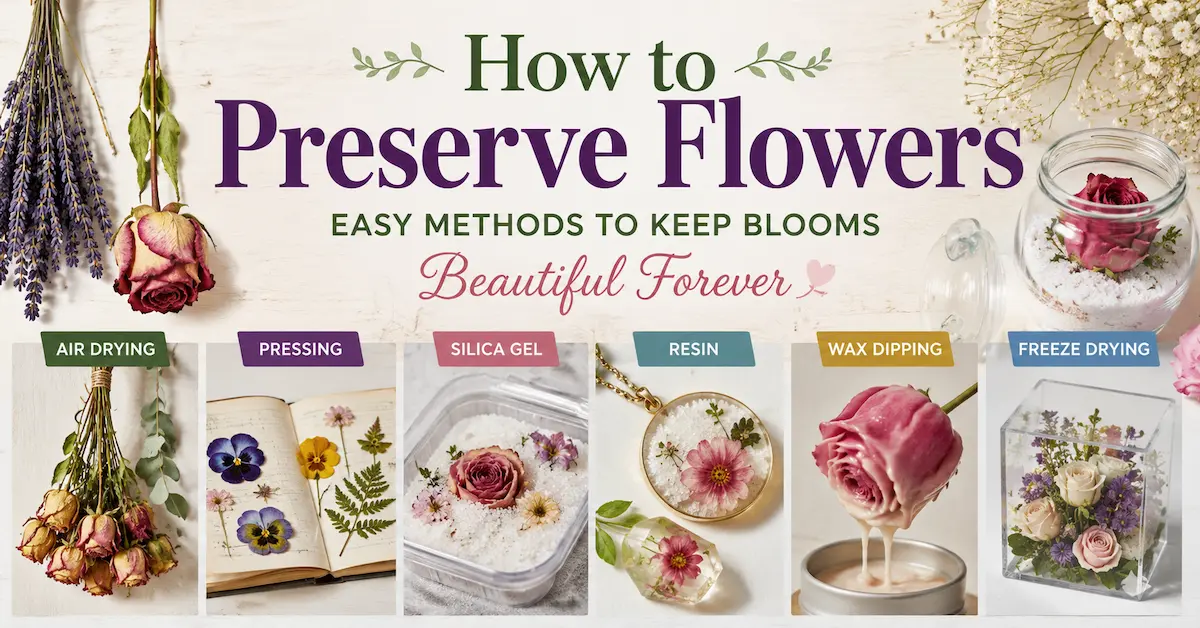
Learning how to preserve flowers lets you keep meaningful bouquets, roses, wedding flowers, and special memories beautiful for years instead of days.
Whether you want to dry flowers naturally, preserve them in resin, or keep their vibrant colors using silica gel, this guide covers the best flower preservation methods step by step.
We tested the most popular techniques to find:
- the easiest method
- the cheapest option
- the longest-lasting results
- the best way to preserve flower color
- the best methods for wedding bouquets and keepsakes
By the end, you’ll know exactly which preservation method works best for your flowers and goals.
Quick Answer: What Is the Best Way to Preserve Flowers?
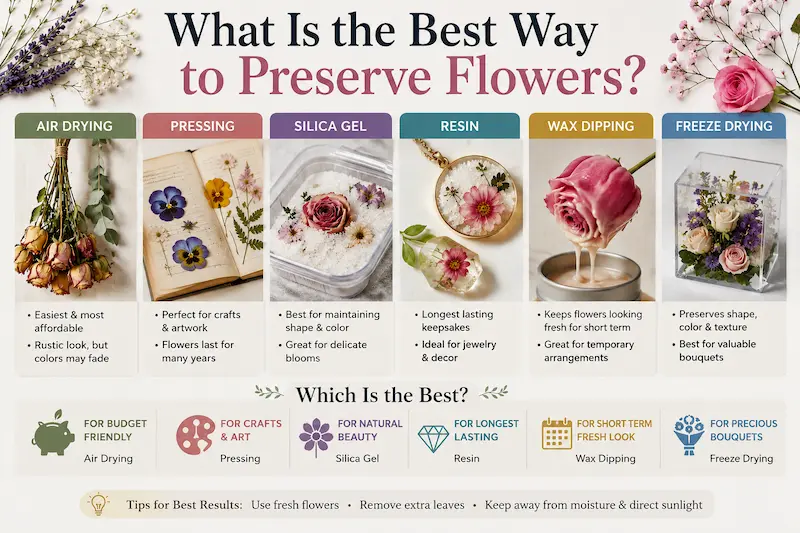
The best flower preservation method depends on your goal:
| Goal | Best Method |
| Easiest method | Air drying |
| Cheapest option | Pressing |
| Best color retention | Silica gel |
| Preserve flowers forever | Resin or freeze drying |
| Most natural look | Glycerin |
| Best for crafts | Pressed flowers |
| Best for wedding bouquets | Freeze drying |
For most people, silica gel offers the best balance of color, shape, affordability, and long-lasting results.
You may also like it:
How to Clean a Cast Iron Pan Rust: Easy Restoration Guide
How to Remove Nail Glue Safely: Easy Methods That Won’t…
Why Preserve Flowers?
Fresh flowers fade quickly, but preserved flowers can last for years with proper care.
People preserve flowers to:
- save wedding bouquets
- keep sentimental gifts
- create DIY decor
- make resin crafts
- preserve memorial flowers
- reduce waste by reusing blooms
Preserved flowers can be turned into:
- wall art
- bookmarks
- jewelry
- coasters
- shadow boxes
- home decor
- scrapbooks
- keepsakes
You may also like it:
How to Sharpen Kitchen Knives Like a Pro (2026)
Comparison of Flower Preservation Methods
| Method | Difficulty | Cost | Lifespan | Color Quality |
| Air Drying | Easy | Low | 1–3 years | Medium |
| Pressing | Easy | Low | 5+ years | Medium |
| Silica Gel | Medium | Medium | Several years | High |
| Resin | Hard | Medium–High | 10+ years | Very High |
| Glycerin | Medium | Medium | Several years | Natural |
| Wax Dipping | Medium | Medium | Weeks | High |
| Oven Drying | Medium | Low | 1–2 years | Medium |
| Microwave Pressing | Easy | Low | Years | Medium |
| Freeze Drying | Hard | High | Decades | Excellent |
| Hairspray Sealing | Easy | Low | Months | Low |
Best Flowers for Preservation
Some flowers preserve much better than others.
| Flower Type | Best Preservation Method |
| Roses | Silica gel, resin, freeze drying |
| Lavender | Air drying |
| Hydrangeas | Air drying |
| Baby’s breath | Air drying |
| Daisies | Pressing |
| Peonies | Silica gel |
| Sunflowers | Resin |
| Eucalyptus | Glycerin |
| Orchids | Freeze drying |
| Tulips | Silica gel |
Fresh flowers with minimal moisture preserve best.
Avoid:
- wilted flowers
- damaged petals
- overly mature blooms
1. Air Drying Flowers (Best for Beginners)
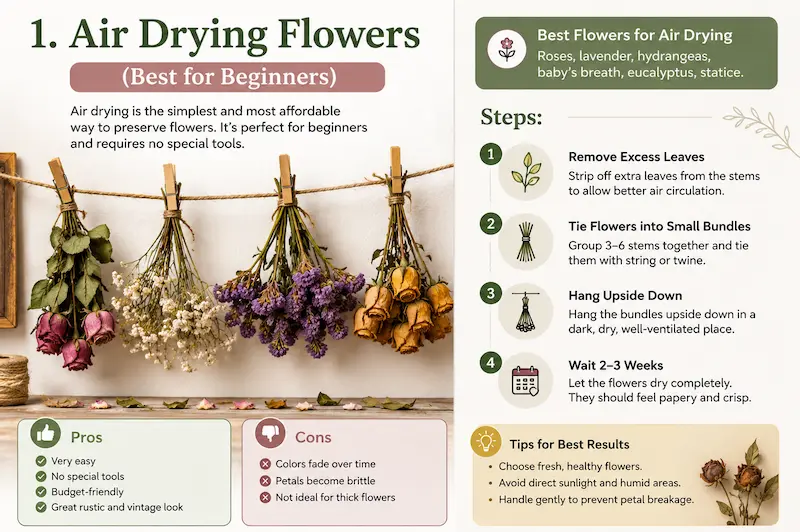
Air drying is the easiest and most affordable flower preservation method.
It works especially well for:
- roses
- lavender
- hydrangeas
- eucalyptus
- baby’s breath
How to Air Dry Flowers
- Remove extra leaves from stems
- Tie flowers into small bundles
- Hang upside down in a dark, dry room
- Leave for 2–3 weeks
- Spray lightly with unscented hairspray
Pros
- Very easy
- No expensive materials
- Great rustic appearance
Cons
- Colors fade over time
- Petals become fragile
Expert Tip
Humidity is the biggest reason air-dried flowers fail. Always dry flowers in a cool room with good airflow.
2. Pressing Flowers (Best for Crafts)
Pressed flowers are perfect for:
- scrapbooks
- phone cases
- bookmarks
- greeting cards
- wall frames
Best Flowers for Pressing
- pansies
- daisies
- violets
- ferns
How to Press Flowers
- Place flowers between parchment paper
- Insert inside a heavy book
- Add extra weight
- Wait 1–2 weeks
- Remove carefully
Pros
- Extremely affordable
- Excellent for flat crafts
- Long-lasting
Cons
- Flowers lose their 3D shape
- Thick flowers press poorly
3. Preserve Flowers With Silica Gel (Best Overall Method)
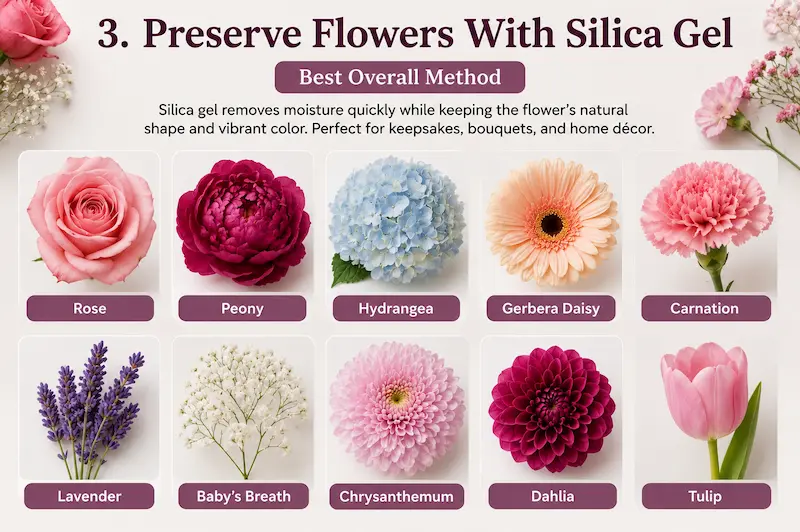
Silica gel is one of the best ways to preserve flowers while maintaining color and shape.
In our testing, silica gel preserved roses and peonies better than air drying.
Best Flowers for Silica Gel
- roses
- dahlias
- peonies
- zinnias
- tulips
How to Preserve Flowers in Silica Gel
- Pour silica gel into an airtight container
- Place flowers upright
- Cover blooms completely
- Seal container
- Leave for 5–7 days
- Remove gently with a soft brush
Why Silica Gel Works Well
- Maintains bright colors
- Preserves shape
- Faster than air drying
- Works for delicate petals
Safety Tip
Wear gloves and avoid inhaling silica dust while handling the crystals.
Don’t skip reading it:
How to Sharpen Kitchen Knives Like a Pro (2026)
How to Attract Crows Complete Beginner-Friendly,…
4. Preserve Flowers in Resin (Longest Lasting DIY Method)
Resin preservation creates permanent keepsakes that can last for decades.
Popular resin projects include:
- jewelry
- coasters
- paperweights
- keychains
- trays
How to Preserve Flowers in Resin
- Dry flowers first
- Mix epoxy resin carefully
- Pour a base layer
- Arrange flowers
- Add final resin layer
- Cure for 24–48 hours
Pros
- Extremely long-lasting
- Stunning appearance
- Excellent color preservation
Cons
- More difficult for beginners
- Resin fumes require ventilation
Important Safety Note
Always use gloves and work in a ventilated area when using epoxy resin.
5. Glycerin Preservation (Most Natural Feel)
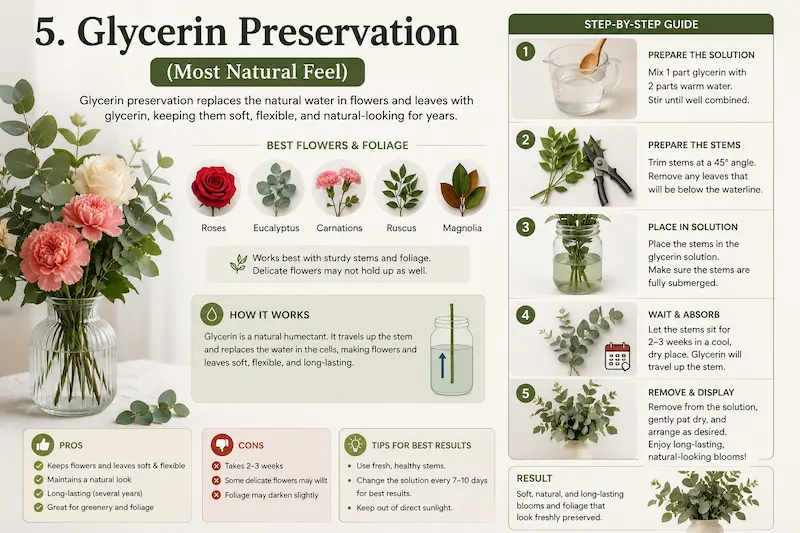
Glycerin keeps flowers soft and flexible instead of brittle.
Florists commonly use this method for greenery and decorative leaves.
Best Flowers for Glycerin
- eucalyptus
- roses
- magnolia leaves
Steps
- Mix 1 part glycerin with 2 parts warm water
- Trim stems
- Place stems into solution
- Wait 2–3 weeks
Benefits
- Flowers stay flexible
- Natural appearance
- Long-lasting texture
6. Wax Dipping Flowers
Wax preservation temporarily keeps flowers looking fresh.
How to Wax Flowers
- Melt paraffin wax
- Let cool slightly
- Dip flowers quickly
- Hang upside down to dry
Lifespan
Typically 1–3 weeks.
This method is best for:
- parties
- centerpieces
- short-term displays
7. Freeze Drying Flowers (Best Professional Method)
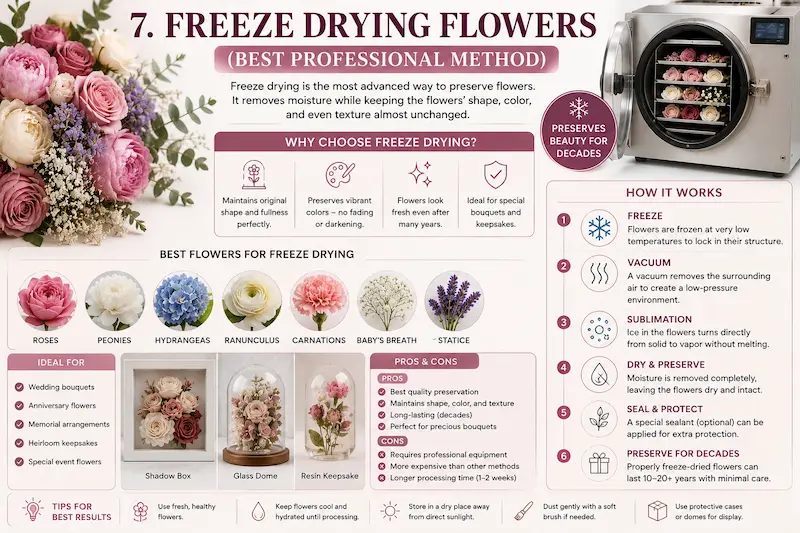
Freeze drying gives the most realistic preserved appearance.
Professional freeze-dried flowers can last decades.
Why Freeze Drying Is Popular
- Preserves original shape
- Maintains vibrant color
- Flowers look nearly fresh
Best For
- wedding bouquets
- memorial flowers
- luxury keepsakes
Important Note
Freeze drying usually requires professional equipment and services.
8. Oven Drying Flowers
Oven drying speeds up preservation compared to air drying.
Steps
- Place flowers on a baking tray
- Set oven to lowest temperature
- Leave oven door slightly open
- Dry for 2–4 hours
Best Flowers
- hydrangeas
- strawflowers
- lavender
Avoid high heat because it can brown petals quickly.
9. Microwave Flower Pressing
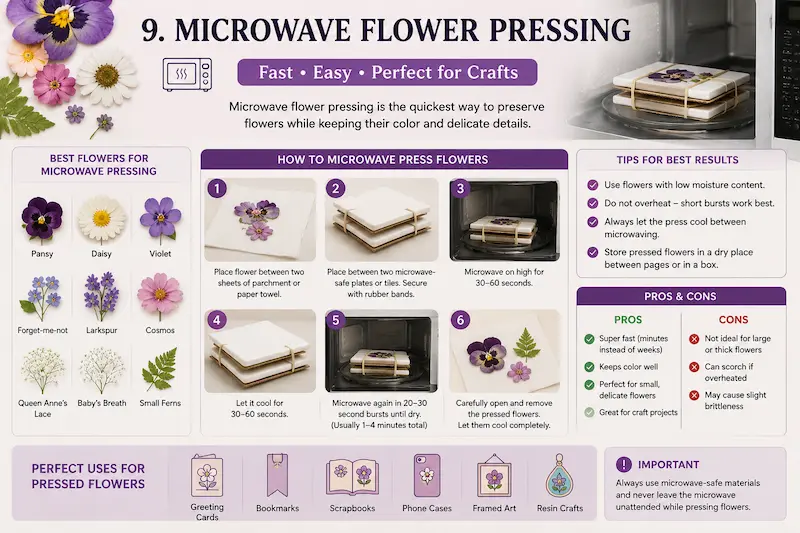
This is the fastest pressing method.
Steps
- Place flowers between parchment paper
- Microwave in short bursts
- Allow cooling between cycles
- Repeat until dry
Best For
- quick craft projects
- last-minute gifts
- small flowers
10. Seal Flowers With Hairspray
Hairspray alone will not fully preserve flowers forever, but it helps strengthen dried petals.
How to Use It
- Spray lightly from 10–12 inches away
- Let dry completely
- Repeat with 2–3 thin coats
This works best after:
- air drying
- pressing
- silica gel drying
How to Preserve Wedding Bouquet Flowers
Wedding bouquets are one of the most common flowers people want to preserve.
Best Methods for Wedding Bouquets
| Goal | Best Method |
| Most realistic appearance | Freeze drying |
| DIY option | Silica gel |
| Long-term keepsake | Resin |
| Budget-friendly | Air drying |
Important Tip
Start preservation within 24–48 hours after the wedding for best results.
Older bouquets lose color and shape quickly.
Common Flower Preservation Problems
| Problem | Cause | Solution |
| Mold growth | Humidity | Improve airflow |
| Brown petals | Too much heat | Lower drying temperature |
| Color fading | Sunlight exposure | Store in dark areas |
| Crumbling petals | Overdrying | Use glycerin or resin |
| Flowers flattening | Excess pressure | Use silica gel instead |
How Long Do Preserved Flowers Last?
| Method | Average Lifespan |
| Air drying | 1–3 years |
| Pressing | 5+ years |
| Silica gel | Several years |
| Resin | 10+ years |
| Glycerin | Several years |
| Freeze drying | Decades |
Proper storage dramatically increases lifespan.
How to Store Preserved Flowers Properly
To keep preserved flowers looking beautiful:
- avoid direct sunlight
- keep away from humidity
- dust gently using a soft brush
- use display cases for fragile flowers
- avoid touching petals often
Sunlight is the main reason preserved flowers fade over time.
Can Preserved Flowers Last Forever?
No preservation method lasts literally forever, but some can last decades.
The longest-lasting methods are:
- freeze drying
- resin preservation
With proper care, preserved flowers can remain beautiful for 10–30 years or more.
Expert Tips for Better Flower Preservation
- Always start with fresh flowers
- Preserve flowers before wilting begins
- Dry flowers away from sunlight
- Use silica gel for best color retention
- Store preserved flowers in dry rooms
- Handle petals gently to avoid breakage
In our testing, roses preserved best using silica gel followed by resin coating.
Frequently Asked Questions
What is the easiest way to preserve flowers?
Air drying is the easiest and most beginner-friendly method.
What is the best method to preserve flowers forever?
Resin and freeze drying provide the longest-lasting results.
Can I preserve flowers without silica gel?
Yes. Air drying, pressing, glycerin, and wax dipping all work without silica gel.
How do florists preserve flowers?
Professional florists commonly use freeze drying and glycerin preservation.
What flowers preserve best?
Roses, lavender, hydrangeas, baby’s breath, eucalyptus, and daisies preserve especially well.
Final Thoughts
Learning how to preserve flowers allows you to turn meaningful moments into lasting keepsakes.
If you want an easy beginner-friendly method, start with air drying or pressing.
For the best overall results, silica gel offers the strongest balance of:
- color retention
- affordability
- flower shape preservation
If you want flowers that can last for decades, resin and freeze drying are the top choices.
No matter which method you choose, preserving flowers lets you keep beauty and memories alive long after fresh blooms fade.
