
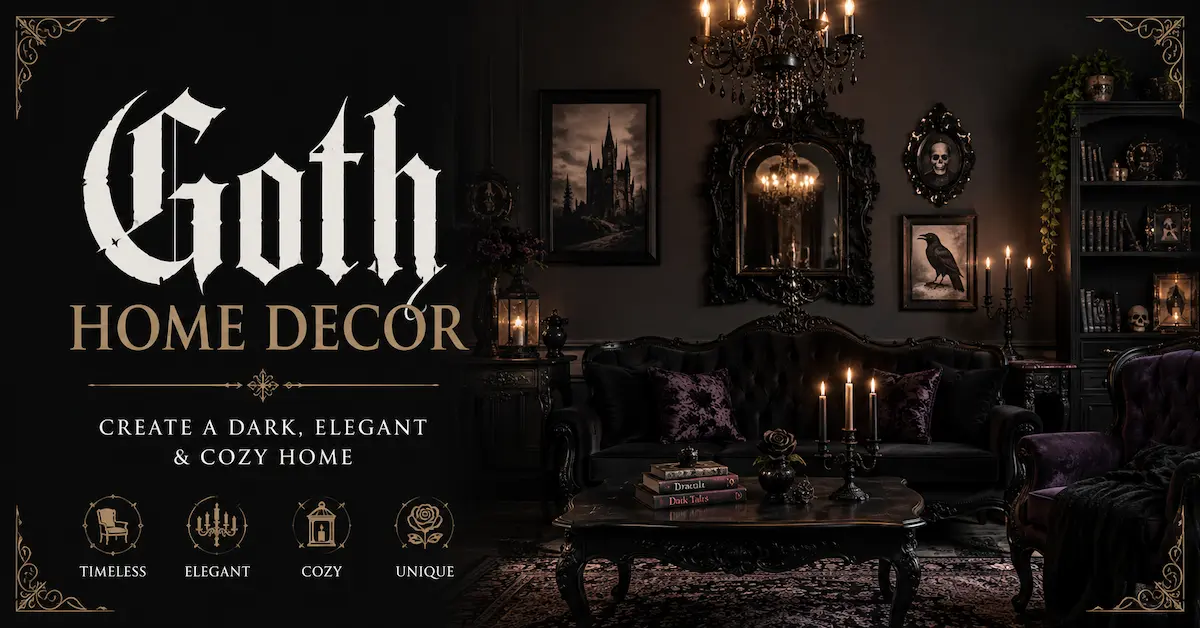
Goth home decor is more than decorating with black walls and spooky accessories. It is a timeless interior design style that combines elegance, mystery, comfort, and personality. Inspired by Gothic architecture, Victorian design, dark academia, and modern minimalism, this aesthetic allows you to create a home that feels dramatic while remaining warm and inviting.
Over the past few years, goth home decor has become increasingly popular. Social media platforms, interior design magazines, and home décor enthusiasts have embraced dark interiors that balance beauty with functionality. Today, gothic homes are no longer associated only with Halloween. Instead, they are seen as stylish, sophisticated, and uniquely personal.
One of the best things about gothic decorating is its flexibility. Whether you love antique furniture, luxurious velvet fabrics, minimalist black interiors, or mystical witch-inspired decorations, there is a gothic style that fits your taste and budget.
Unlike many decorating trends that fade quickly, gothic interiors have remained popular for centuries because they focus on quality materials, timeless furniture, and carefully chosen decorative pieces. A well-designed gothic room feels cozy instead of gloomy, luxurious instead of cluttered, and expressive instead of ordinary.
What Is Goth Home Decor?
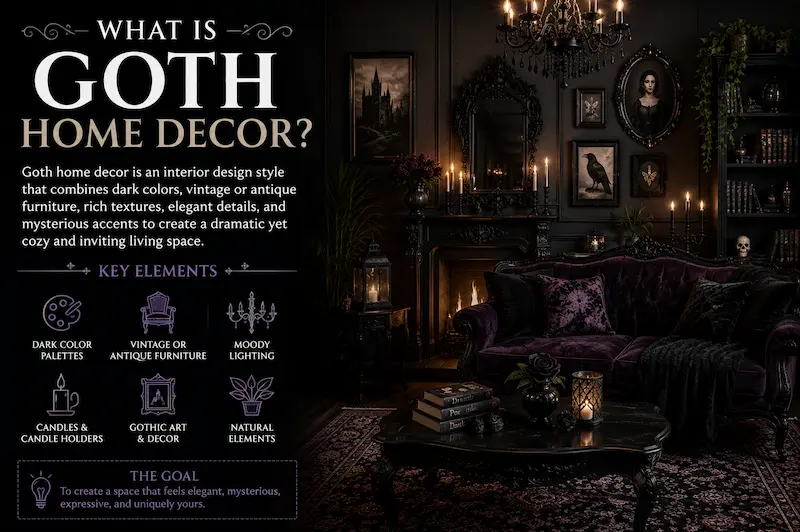
Goth home decor is an interior design style that blends dark colors, dramatic details, vintage furniture, rich textures, and elegant accessories to create a home that feels both mysterious and inviting. While black is often the signature color, gothic interiors also use deep shades like burgundy, emerald green, charcoal gray, navy blue, and dark brown to add warmth and depth.
Contrary to popular belief, a gothic home isn’t meant to look scary or haunted. Instead, it’s designed to feel luxurious, comfortable, and full of personality. The goal is to create a space that reflects your individual style while balancing beauty, function, and atmosphere.
Today, goth home decor comes in many forms. Some people prefer traditional Victorian-inspired rooms filled with antique furniture and ornate details, while others choose a modern gothic look with clean lines, matte black finishes, and minimalist décor. This flexibility makes gothic decorating suitable for almost any home, whether you live in a large house or a small apartment.
The History of Gothic Interior Design
The roots of gothic interior design go back to the Middle Ages, when Gothic architecture became popular across Europe. Famous cathedrals and castles featured tall ceilings, pointed arches, stained glass windows, carved wood, and intricate stonework. These grand buildings inspired an interior style that emphasized craftsmanship, elegance, and dramatic design.
During the Victorian era, Gothic Revival became fashionable once again. Wealthy homeowners filled their homes with carved wooden furniture, heavy curtains, chandeliers, ornate mirrors, and richly decorated walls. Many of these classic elements are still used in modern gothic homes today.
In recent years, social media and interior design trends have given gothic decorating a fresh, modern twist. Homeowners now mix traditional gothic features with contemporary furniture, smart lighting, and practical layouts to create spaces that feel timeless instead of outdated.
Gothic Architecture vs. Modern Goth Home Decor
Many people confuse Gothic architecture with modern goth home decor, but they are not the same.
| Gothic Architecture | Modern Goth Home Decor |
| Large churches and castles | Everyday homes and apartments |
| Pointed arches and stained glass | Dark walls, elegant furniture, and cozy lighting |
| Stone construction | Wood, velvet, leather, glass, and metal |
| Massive ceilings | Standard home layouts |
| Historic buildings | Practical modern interiors |
Modern gothic decorating takes inspiration from historic architecture without requiring expensive renovations. Instead, it recreates the same dramatic feeling using furniture, lighting, colors, textures, and carefully selected decorative pieces.
Why People Love Goth Home Decor
There are many reasons why gothic interiors continue to grow in popularity.
Timeless Beauty
Unlike many decorating trends that come and go, gothic interiors have remained stylish for centuries. Antique furniture, dark wood, velvet fabrics, and elegant lighting never feel outdated.
Personal Expression
A gothic home allows you to express your personality. Whether your style is romantic, mysterious, vintage, artistic, or minimalist, gothic decorating gives you the freedom to create a home that feels uniquely yours.
Warm and Cozy Atmosphere
Many people assume dark rooms feel cold, but the opposite is often true. When paired with warm lighting, soft blankets, layered rugs, and plush velvet cushions, a gothic room becomes one of the coziest spaces in the home.
High-End Appearance
Rich textures such as velvet, leather, brass, and carved wood instantly make a room feel more luxurious without requiring a huge budget.
Easy to Customize
Another advantage of goth home decor is its versatility. You don’t have to redecorate your entire house overnight. You can start with simple updates like artwork, candles, curtains, or decorative mirrors and gradually add larger furniture pieces over time.
Common Myths About Goth Home Decor
Many decorating guides overlook these misconceptions, but understanding them helps you create a more balanced and beautiful space.
Myth 1: Everything Has to Be Black
Reality: Black is only one part of the gothic color palette. Deep green, burgundy, navy blue, charcoal gray, plum, and dark brown add richness while preventing rooms from feeling flat.
Myth 2: Gothic Homes Are Dark and Depressing
Reality: A well-designed gothic room uses layered lighting, candles, mirrors, metallic accents, and natural textures to create warmth and comfort.
Myth 3: Gothic Decor Is Only for Halloween
Reality: Gothic interior design is a timeless decorating style that can be enjoyed all year. Seasonal accessories can be added without changing the overall aesthetic.
Myth 4: Gothic Decorating Is Expensive
Reality: Many beautiful gothic pieces can be found in thrift stores, flea markets, antique shops, and online marketplaces. Simple DIY projects can also create a high-end look for a fraction of the cost.
Myth 5: Gothic Style Only Works in Large Houses
Reality: Even small apartments can embrace gothic design by using mirrors, multifunctional furniture, vertical storage, and carefully balanced dark colors.
The Key Elements of Goth Home Decor
Although every gothic home looks different, most successful interiors include several essential design elements.
- Rich, dark color palettes
- Antique or vintage-inspired furniture
- Ornate mirrors and decorative frames
- Velvet, leather, and dark wood textures
- Layered lighting with chandeliers, sconces, and candles
- Elegant artwork and gallery walls
- Decorative books and vintage accessories
- Natural materials such as stone, wood, and metal
- Plants that add contrast and freshness
- Personal collections that reflect your interests
The beauty of goth home decor is that you don’t need every item on this list. Even adding a few carefully chosen pieces can completely transform the atmosphere of a room.
Is Goth Home Decor Right for You?
Gothic decorating is an excellent choice if you:
- Love elegant and dramatic interiors
- Enjoy vintage or antique furniture
- Prefer cozy spaces with warm lighting
- Appreciate rich textures like velvet and leather
- Want a home that reflects your personality
- Enjoy mixing classic and modern design
- Like timeless décor instead of short-lived trends
Whether you choose a traditional Victorian look or a sleek modern gothic style, the goal remains the same: creating a home that feels beautiful, comfortable, and uniquely yours.
Now that you understand the foundation of goth home decor, the next step is exploring the different gothic decorating styles so you can discover the one that best matches your personality and home.
The Core Principles of Goth Home Decor
A beautiful gothic home isn’t created by filling every corner with dark decorations. Instead, it follows a few simple design principles.
Balance
Dark colors should be balanced with lighter accents, reflective surfaces, and warm lighting to keep the room feeling open and welcoming.
Texture
Mixing different materials creates depth and interest. Velvet, leather, wood, metal, lace, and glass all play an important role in gothic interiors.
Quality Over Quantity
Choose fewer high-quality decorative pieces instead of overcrowding your space with inexpensive items.
Personal Expression
A gothic home should tell your story. Display books, artwork, collectibles, travel souvenirs, or vintage treasures that have personal meaning.
Timeless Design
Focus on classic furniture and décor that will still look beautiful years from now instead of following temporary decorating trends.
Common Features You’ll Find in Gothic Homes
Most gothic interiors include a combination of the following elements:
- Black, charcoal, burgundy, emerald green, or navy walls
- Dark wood furniture
- Velvet sofas and chairs
- Leather seating
- Antique dressers
- Crystal chandeliers
- Wall sconces
- Decorative candles
- Vintage mirrors
- Botanical prints
- Gothic artwork
- Ornate picture frames
- Skull or raven accents
- Bookshelves filled with classic novels
- Layered rugs
- Heavy curtains
- Indoor plants that add contrast
You don’t need every item on this list. Even a few carefully chosen pieces can create a strong gothic atmosphere.
Is Goth Home Decor Only About Black?
One of the biggest misconceptions is that every gothic room must be completely black.
In reality, successful gothic interiors use a variety of rich colors, including:
- Charcoal gray
- Deep burgundy
- Forest green
- Emerald green
- Dark navy blue
- Plum
- Chocolate brown
- Antique gold
- Brass
- Cream for subtle contrast
These colors create depth while making rooms feel warm and inviting rather than dark and gloomy.
Who Should Choose Goth Home Decor?
This decorating style is perfect for people who:
- Love elegant interiors with character
- Appreciate antique or vintage furniture
- Prefer cozy spaces over bright minimalist rooms
- Enjoy collecting books, artwork, or unique decorations
- Want a timeless home instead of following trends
- Like mixing classic and modern design elements
- Enjoy decorating with rich colors and luxurious textures
Whether you decorate one room or your entire house, goth home decor gives you the freedom to create a home that feels distinctive, comfortable, and truly your own.
A Beginner’s Roadmap to Decorating a Gothic Home
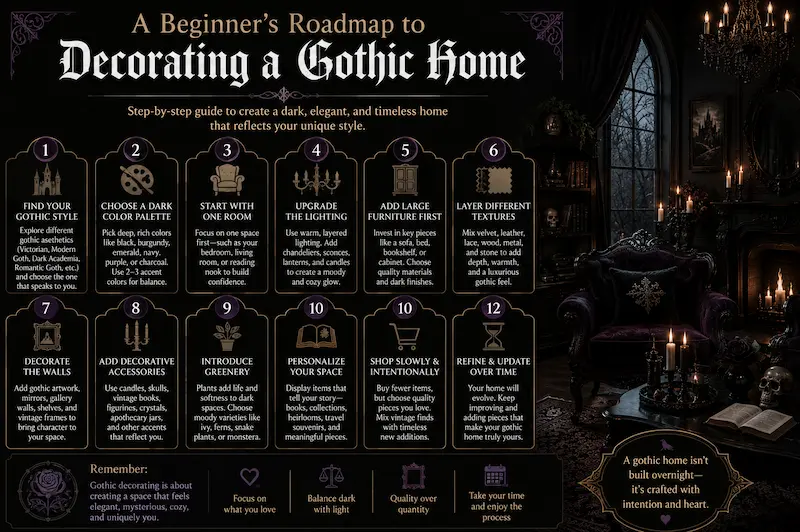
Decorating your home in a gothic style doesn’t have to happen all at once. In fact, the best gothic interiors are usually built over time. By adding carefully chosen pieces gradually, you can create a space that feels personal, balanced, and timeless without overspending.
If you’re new to goth home decor, follow this simple step-by-step roadmap to transform your home with confidence.
Step 1: Find Your Gothic Style
Before buying furniture or decorations, decide which type of gothic aesthetic you love most. This will help you create a cohesive look instead of mixing too many unrelated styles.
Popular options include:
- Victorian Gothic: Antique furniture, velvet fabrics, carved wood, and luxurious details.
- Modern Goth: Matte black finishes, clean lines, and minimalist décor.
- Dark Academia: Vintage books, dark wood, leather chairs, and classic artwork.
- Romantic Gothic: Candles, lace, roses, soft lighting, and elegant vintage accents.
- Witchy Gothic: Crystals, moon décor, apothecary bottles, and mystical artwork.
Create a mood board using your favorite inspiration photos before you start shopping.
Step 2: Choose a Dark Color Palette
A successful gothic room uses a balanced color scheme instead of relying on black alone.
Choose one main color and two or three accent colors.
For example:
- Black + Burgundy + Antique Gold
- Charcoal Gray + Emerald Green + Brass
- Deep Navy + Black + Dark Wood
- Chocolate Brown + Forest Green + Bronze
Keeping your palette consistent throughout your home creates a polished and elegant appearance.
Step 3: Start with One Room
Trying to decorate your entire house at once can be expensive and overwhelming.
Instead, choose one room to transform first. Most beginners start with:
- The living room
- The bedroom
- A reading nook
- A home office
Completing one space gives you confidence and helps you refine your style before moving on to other rooms.
Step 4: Upgrade the Lighting
Lighting is one of the most important elements of goth home decor. Even the most beautiful furniture can look dull under harsh white lights.
Replace bright cool-toned bulbs with warm white lighting and layer different light sources throughout the room.
Good lighting options include:
- Chandeliers
- Wall sconces
- Table lamps
- Floor lamps
- Lanterns
- Flameless LED candles
- Fairy lights for subtle ambiance
Warm lighting makes dark interiors feel inviting instead of gloomy.
Step 5: Add Large Furniture First
Buy your biggest furniture pieces before purchasing decorative accessories.
Focus on items such as:
- Sofa
- Bed frame
- Bookshelf
- Dining table
- Wardrobe
- Accent chair
Choose timeless furniture made from quality materials like dark wood, leather, or velvet. Neutral pieces will remain stylish even if your decorating preferences evolve over time.
Step 6: Layer Different Textures
Texture is what gives gothic interiors their luxurious appearance.
Combine several materials in each room, such as:
- Velvet cushions
- Leather chairs
- Wooden furniture
- Brass candle holders
- Glass vases
- Lace curtains
- Woven rugs
Mixing textures adds warmth, depth, and visual interest without making the space feel cluttered.
Step 7: Decorate the Walls
Bare walls can make a room feel unfinished.
Create visual interest with:
- Vintage artwork
- Ornate mirrors
- Botanical prints
- Floating shelves
- Decorative picture frames
- Gallery walls
- Antique clocks
Instead of filling every wall, choose a few statement pieces that reflect your personality.
Step 8: Add Decorative Accessories
Accessories bring your gothic style to life.
Popular choices include:
- Black candles
- Candelabras
- Raven figurines
- Vintage books
- Crystal displays
- Decorative skulls
- Apothecary bottles
- Dark floral arrangements
- Hourglasses
- Metal trays
Choose accessories that complement your overall theme rather than buying everything at once.
Step 9: Introduce Greenery
Dark interiors benefit from natural elements that soften the overall look.
Plants that pair beautifully with gothic décor include:
- Snake Plant
- Raven ZZ Plant
- Monstera
- English Ivy
- Ferns
- Rubber Plant
Display them in black ceramic pots, antique planters, or brass containers for a cohesive design.
Step 10: Personalize Your Space
The most memorable gothic homes reflect the people who live in them.
Add personal touches such as:
- Favorite books
- Family heirlooms
- Vintage collectibles
- Handmade artwork
- Travel souvenirs
- Musical instruments
- Antique finds
These meaningful items make your home feel authentic rather than looking like a showroom.
Step 11: Shop Slowly and Intentionally
One of the biggest mistakes beginners make is buying every gothic decoration they see.
Instead:
- Invest in quality over quantity.
- Compare prices before purchasing.
- Mix new pieces with vintage finds.
- Visit thrift stores and antique markets.
- Leave empty space to let statement pieces stand out.
Building your collection slowly often results in a more elegant and unique home.
Step 12: Refine and Update Over Time
Your home doesn’t have to be perfect from day one.
Live in the space for a while, notice what works, and make small improvements over time. Replace lower-quality items with better ones as your budget allows, experiment with different textures and lighting, and continue adding pieces that truly reflect your personality.
Remember, the best goth home decor isn’t created overnight. It’s carefully curated over time, resulting in a home that feels timeless, comfortable, and uniquely yours.
What is goth home decor?
Goth home decor is an interior design style that combines dark color palettes, vintage or antique furniture, luxurious textures, elegant lighting, and decorative accessories to create a dramatic yet cozy living space. While black is the signature color, shades like burgundy, emerald green, charcoal gray, and deep navy are also commonly used to add warmth and depth.
Can goth home decor work in a small apartment?
Yes. Goth home decor can work beautifully in small apartments when designed thoughtfully. Use mirrors to reflect light, choose multifunctional furniture, add warm lighting, and incorporate dark colors as accents instead of painting every wall black. Vertical storage and floating shelves also help maximize space while maintaining the gothic aesthetic.
How can I decorate my home in a gothic style on a budget?
You don’t need a large budget to create a beautiful gothic home. Shop at thrift stores, flea markets, antique shops, and online marketplaces for unique furniture and décor. DIY projects like painting furniture black, creating gothic artwork, making candle holders, or upcycling vintage frames can also help you achieve the look for less.
Is goth home decor only for Halloween?
No. Although many people associate gothic décor with Halloween, true goth home decor is a year-round interior design style. It focuses on elegant furniture, rich textures, timeless colors, and carefully chosen decorative pieces rather than seasonal decorations.
Final Thoughts
Creating a beautiful goth home decor style is about more than choosing dark colors or adding dramatic accessories. It’s about designing a home that reflects your personality, feels comfortable, and tells your unique story. Whether you’re drawn to the elegance of Victorian Gothic, the simplicity of Modern Goth, or the cozy charm of Dark Academia, there’s no single “right” way to embrace this timeless aesthetic.
The key to a successful gothic interior is balance. Combine rich colors with warm lighting, mix luxurious textures like velvet and leather, and invest in quality furniture that will stand the test of time. Add meaningful artwork, vintage finds, books, plants, and decorative accents to create a space that feels layered, inviting, and uniquely yours.
Remember, you don’t need to transform your entire home overnight. Start with one room, build your collection gradually, and focus on choosing pieces you truly love. Shopping second-hand, taking on DIY projects, and blending vintage treasures with modern elements can help you create a stunning gothic home without exceeding your budget.
Most importantly, don’t be afraid to make the style your own. The best goth home decor isn’t about following strict design rules—it’s about creating a space where you feel inspired, relaxed, and at home every day.
