
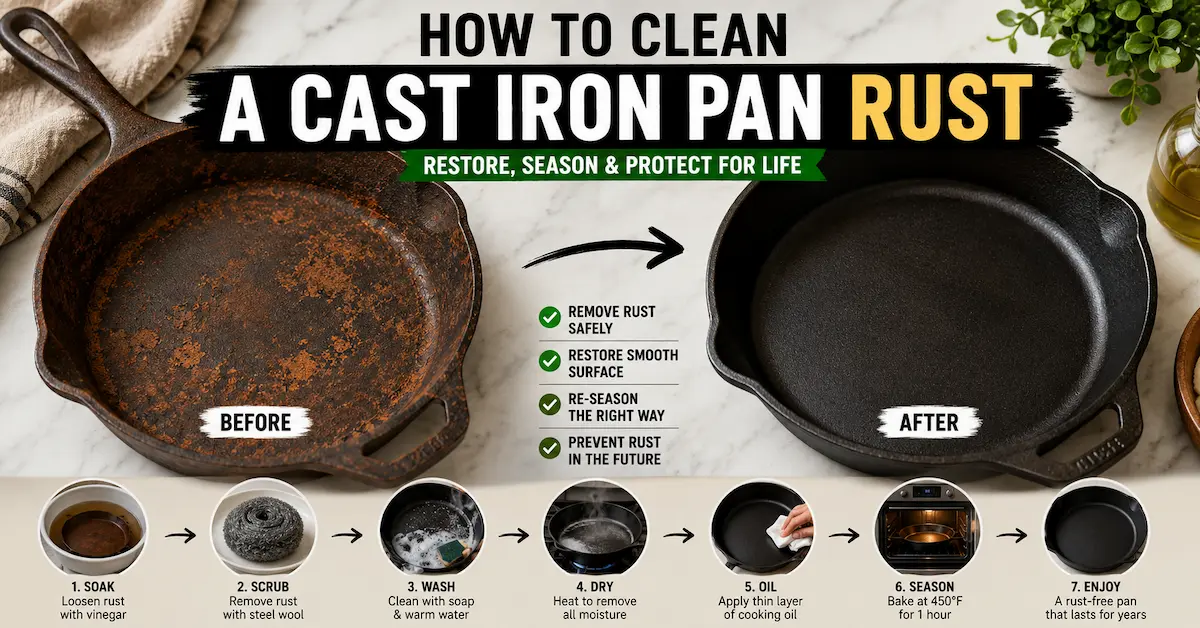
A rusty cast iron pan may look ruined, but in most cases, it can be fully restored. Cast iron cookware is known for its durability, and even pans covered in rust can often be brought back to excellent condition with the right cleaning and seasoning techniques.
If you’re wondering how to clean a cast iron pan rust, this complete guide covers everything you need to know. You’ll learn how to remove light, moderate, and heavy rust, how to re-season your cookware, which oils work best, common mistakes to avoid, and how to prevent rust from returning.
Why Does Cast Iron Rust?
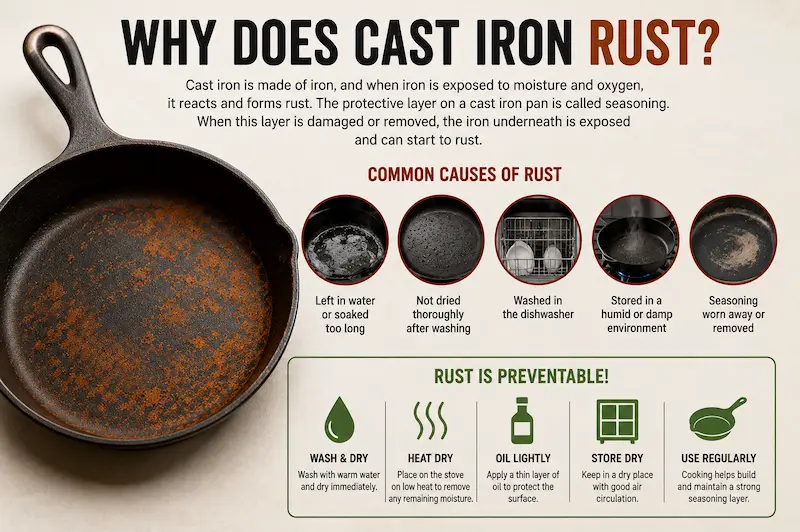
Unlike stainless steel, cast iron has no natural resistance to rust. Instead, it relies on a protective seasoning layer created when oil bonds to the metal during heating.
Rust develops when this protective layer breaks down and moisture reaches the iron.
Common causes include:
- Leaving the pan wet after washing
- Soaking it in water for long periods
- Storing it in a humid environment
- Putting it in the dishwasher
- Allowing the seasoning layer to wear away
The good news is that rust is usually removable, even when it appears severe.
You may also like it:
How to Sharpen Kitchen Knives Like a Pro (2026)
How to Attract Crows Complete Beginner-Friendly,…
Is Rusty Cast Iron Safe to Cook With?
A small amount of surface rust is generally not dangerous, but you should remove rust before cooking.
Rust can:
- Affect food flavor
- Damage seasoning
- Create a rough cooking surface
- Continue spreading if left untreated
Light rust is usually easy to remove. However, heavily flaking rust and deep pitting may require more extensive restoration.
For the best cooking results, always restore and re-season rusty cast iron before using it.
Can a Rusty Cast Iron Pan Be Saved?
In most situations, yes.
Cast iron can often be restored even when rust covers large portions of the cookware.
You can usually save pans with:
- Light surface rust
- Moderate rust buildup
- Heavy rust coverage
- Lost seasoning
Replacement may be necessary if the pan has:
- Large cracks
- Severe warping
- Structural damage
- Extensive deep pitting
Because cast iron is incredibly durable, many decades-old pans can still be restored successfully.
Identify the Level of Rust First
Before choosing a cleaning method, determine how severe the rust is.
Light Rust
Common signs:
- Small orange spots
- Thin rust patches
- Most seasoning remains intact
Moderate Rust
Common signs:
- Larger rust areas
- Rough texture
- Visible flaking
Heavy Rust
Common signs:
- Rust covering most of the pan
- Thick corrosion
- Little or no remaining seasoning
The level of rust determines the best restoration approach.
What You’ll Need
Gather the following supplies:
- Steel wool or scrub pad
- Dish soap
- White vinegar
- Water
- Paper towels
- Cooking oil
- Lint-free cloth
- Oven mitts
For heavily rusted cookware, you may also need:
- Plastic bucket or container
- Electrolysis setup (optional)
How to Clean a Cast Iron Pan Rust (Light Rust)
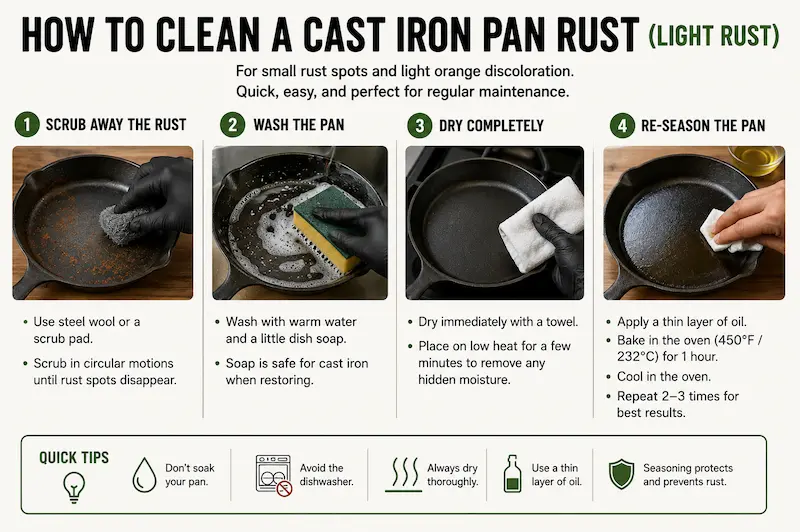
If the rust is minor, restoration is usually quick and easy.
Step 1: Scrub Away the Rust
Use steel wool or a scrub pad to remove visible rust spots.
Apply firm pressure and continue scrubbing until the orange discoloration disappears.
Step 2: Wash the Pan
Wash the cookware with warm water and a small amount of dish soap.
Modern dish soap is safe during restoration and helps remove loosened rust particles.
Step 3: Dry Completely
Dry the pan immediately with a towel.
Then place it on low heat for several minutes to evaporate any hidden moisture.
Step 4: Re-Season the Pan
Apply a thin coat of oil and season the pan following the instructions later in this guide.
How to Remove Moderate Rust Using Vinegar
For stubborn rust that doesn’t come off with scrubbing alone, vinegar works extremely well.
Step 1: Create a Vinegar Solution
Mix:
- 50% white vinegar
- 50% water
Step 2: Soak the Pan
Submerge the rusty areas in the solution.
Allow the pan to soak for 1–3 hours.
Check it regularly during the process.
Step 3: Scrub Thoroughly
Remove the pan and scrub with steel wool.
The rust should loosen significantly and come off more easily.
Step 4: Wash and Dry
Rinse thoroughly.
Wash with warm soapy water.
Dry immediately and place on low heat for a few minutes.
When Vinegar Can Damage Cast Iron
While vinegar is highly effective, improper use can damage cast iron.
Avoid:
- Soaking longer than 24 hours
- Leaving the pan unattended overnight
- Repeated long soaking sessions without inspection
Excessive exposure can begin dissolving the metal and create permanent pitting.
For best results, inspect the pan every hour and remove it once the rust loosens.
How to Restore a Heavily Rusted Cast Iron Pan
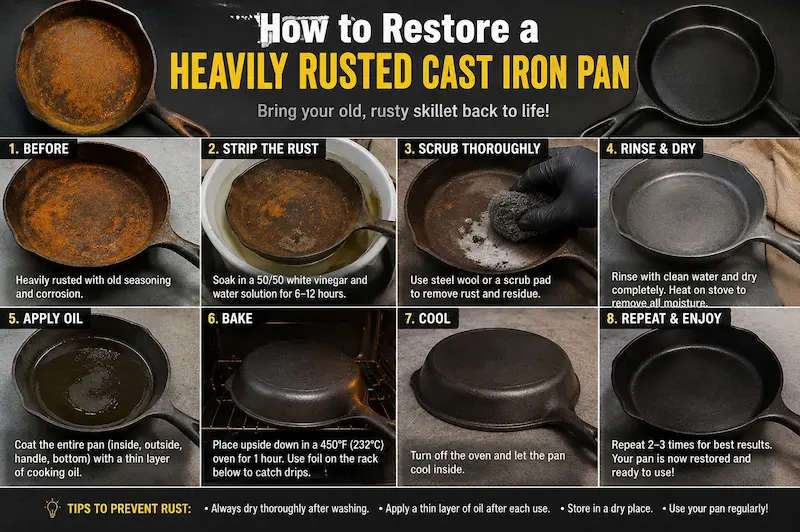
When rust covers most of the cookware, deeper restoration methods may be necessary.
Method 1: Repeated Vinegar Treatments
Several rounds of vinegar soaking and scrubbing can often remove heavy rust.
This method requires patience but works well for many heavily rusted pans.
Method 2: Electrolysis Cleaning
Electrolysis is popular among cast iron collectors and restoration experts.
Benefits include:
- Removes rust and old seasoning
- Preserves original metal
- Requires less physical scrubbing
- Excellent for antique cookware
Although effective, it requires specialized equipment and experience.
Don’t skip reading it:
How to Remove Nail Glue Safely: Easy Methods That Won’t…
How to Preserve Flowers: 10 Easy Methods That Last
Best Rust Removal Methods Compared
| Method | Best For | Difficulty | Time Required |
| Steel Wool Scrubbing | Light Rust | Easy | 20–30 Minutes |
| Vinegar Soak | Moderate Rust | Easy | 1–4 Hours |
| Repeated Vinegar Treatments | Heavy Rust | Moderate | Several Hours |
| Electrolysis | Severe Rust & Antique Cast Iron | Advanced | 12–24 Hours |
| Lye Bath + Vinegar | Full Restoration Projects | Advanced | 24+ Hours |
For most home cooks, steel wool and vinegar are all that’s needed.
How to Re-Season Cast Iron After Rust Removal
Seasoning protects the pan from future rust and creates a naturally non-stick cooking surface.
Step 1: Apply a Thin Layer of Oil
Coat:
- Inside
- Outside
- Bottom
- Handle
Then wipe away nearly all excess oil.
The pan should appear almost dry.
Step 2: Bake Upside Down
Preheat the oven to 450°F (232°C).
Place aluminum foil on the lower rack.
Put the pan upside down on the center rack.
Bake for one hour.
Step 3: Cool Slowly
Turn off the oven.
Allow the pan to cool inside the oven.
Step 4: Repeat if Needed
For stronger seasoning, repeat the process 2–3 times.
Best Oils for Seasoning Cast Iron
Some oils create more durable seasoning layers than others.
| Oil | Recommended? | Benefits |
| Grapeseed Oil | Yes | Durable seasoning |
| Canola Oil | Yes | Affordable and effective |
| Vegetable Oil | Yes | Easy to find |
| Avocado Oil | Yes | High smoke point |
| Sunflower Oil | Yes | Strong protection |
| Olive Oil | Acceptable | Less durable seasoning |
| Flaxseed Oil | Mixed Reviews | Can become brittle |
What Should a Restored Cast Iron Pan Look Like?
After restoration, your cookware should have:
- No orange rust spots
- Clean gray metal before seasoning
- Smooth surface texture
- Even black or dark brown finish after seasoning
- Dry, non-sticky appearance
If rust-colored spots remain, repeat the cleaning process before seasoning.
How Long Does Cast Iron Restoration Take?
| Rust Level | Estimated Time |
| Light Rust | 20–30 Minutes |
| Moderate Rust | 1–4 Hours |
| Heavy Rust | 12–48 Hours |
The exact time depends on the age of the rust and the condition of the cookware.
Cast Iron Restoration Problems and Fixes
Even experienced users sometimes encounter issues.
Rust Came Back After Cleaning
Cause: Moisture remained on the surface.
Fix: Dry thoroughly and re-season immediately.
Seasoning Feels Sticky or Gummy
Cause: Too much oil was applied.
Fix: Use thinner oil layers during seasoning.
Black Flakes Are Coming Off
Cause: Old seasoning is peeling.
Fix: Remove loose seasoning and re-season.
Seasoning Won’t Stick
Cause: Excess oil or insufficient heat.
Fix: Clean thoroughly and apply multiple thin seasoning coats.
Rust Keeps Returning
Cause: Humidity or improper storage.
Fix: Improve storage conditions and maintain seasoning.
Common Mistakes to Avoid
Many restoration problems come from simple mistakes.
Using Too Much Oil
Excess oil creates sticky seasoning.
Air Drying the Pan
Even small amounts of moisture can trigger rust.
Skipping Seasoning
Bare cast iron will rust quickly.
Soaking Too Long in Vinegar
Over-soaking can damage the metal.
Storing in Damp Areas
Humidity encourages corrosion.
Best Storage Practices After Restoration
Proper storage is essential for preventing future rust.
Follow these guidelines:
- Store only when completely dry
- Keep in a cool, dry area
- Place a paper towel inside the pan
- Avoid humid cabinets
- Separate stacked pans with paper towels
- Leave lids slightly open for airflow
Good storage habits significantly extend the life of your seasoning.
Real-World Cast Iron Restoration Experience
The amount of work required depends on the severity of the rust.
Lightly rusted pans can often be restored in under 30 minutes using steel wool and proper seasoning.
Heavily rusted flea-market finds or antique cookware may require multiple vinegar treatments, extensive scrubbing, and several seasoning cycles before they return to cooking condition.
The durability of cast iron is one reason why cookware that is decades old can often be restored and used successfully today.
How to Prevent Cast Iron Rust in the Future
Once your pan is restored, maintenance becomes much easier.
To prevent rust:
- Dry immediately after washing
- Apply a light coating of oil after cleaning
- Store in a dry location
- Avoid soaking in water
- Never use a dishwasher
- Maintain the seasoning layer
- Use the pan regularly
Regular cooking actually helps strengthen the seasoning over time.
Frequently Asked Questions
Can rusted cast iron be saved?
Yes. Most rusty cast iron pans can be fully restored with proper cleaning and seasoning.
Is vinegar safe for cast iron?
Yes, when used correctly. Avoid soaking longer than 24 hours.
Can Coke remove rust from cast iron?
Coca-Cola contains mild acids that may loosen rust, but vinegar is generally more effective.
Can baking soda remove rust from cast iron?
Baking soda can help remove light rust when used as a scrubbing paste but is less effective on heavy rust.
Should I use steel wool on cast iron?
Yes. Steel wool is one of the most effective tools for rust removal during restoration.
Why is my cast iron sticky after seasoning?
Too much oil was likely applied before baking.
How do I know when all rust is gone?
The pan should have no orange discoloration, loose rust particles, or rough rusty patches.
Can a cast iron pan be too rusty to restore?
Most pans can be restored, but severe cracks, major warping, or extensive deep pitting may make replacement necessary.
How often should I season my cast iron pan?
Most cookware only needs occasional re-seasoning when properly maintained.
How can I prevent rust from returning?
Dry thoroughly, apply a thin oil coating after cleaning, store in a dry area, and maintain seasoning regularly.
Final Thoughts
Learning how to clean a cast iron pan rust can save cookware that looks beyond repair. Whether you’re dealing with a few surface rust spots or restoring a heavily rusted skillet from a flea market, the right cleaning and seasoning methods can bring cast iron back to life.
With proper care, regular seasoning, and good storage habits, a cast iron pan can last for generations and remain one of the most reliable pieces of cookware in your kitchen.
