
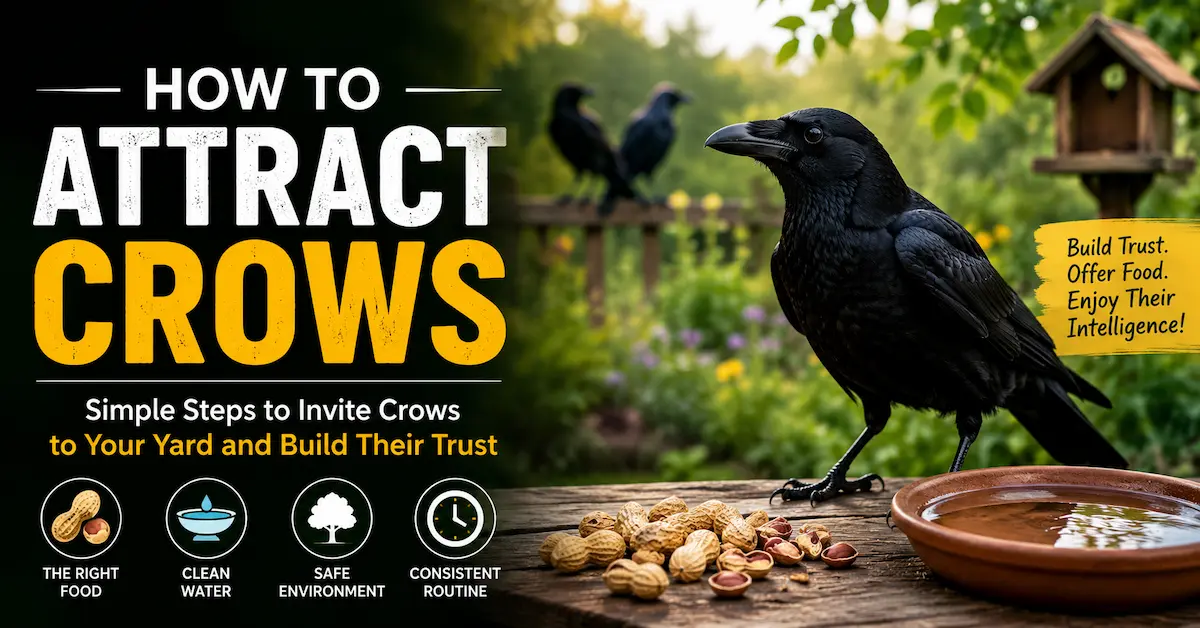
Crows are among the most intelligent wild birds on Earth. They can recognize human faces, remember past experiences for years, and even share information with other crows. Because of this intelligence, learning how to attract crows is not just about leaving food outside—it is about consistency, trust, and understanding their behavior.
This guide explains everything in a practical, beginner-friendly way, including food choices, routines, trust-building, behavior science, common mistakes, and a step-by-step plan you can follow.
Understanding Crow Behavior
Before learning how to attract crows, you must understand what influences their decisions.
Crows usually choose places that provide:
- Reliable and predictable food sources
- Safety from predators and disturbances
- High resting spots like trees, roofs, and poles
- Quiet environments where they can observe safely
Crows are extremely cautious birds. If something feels unsafe or inconsistent, they will avoid it even if food is available.
Another important fact is that crows rely heavily on memory. Once they identify a safe feeding location, they are likely to return repeatedly.
You may also like it:
How to Clean a Cast Iron Pan Rust: Easy Restoration Guide
How to Remove Nail Glue Safely: Easy Methods That Won’t…
Best Foods to Attract Crows Quickly
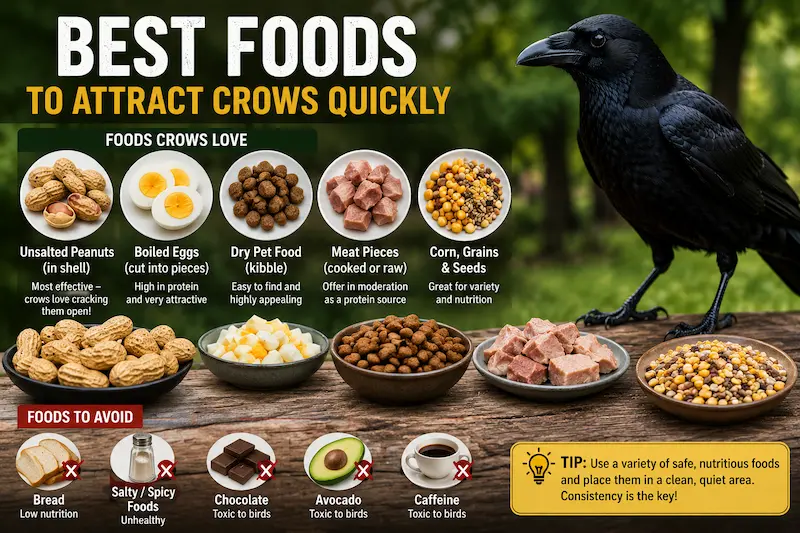
Food is the first step in attracting crows, but not all foods work equally well.
Best foods crows love
- Unsalted peanuts (in shell)
- Boiled eggs (cut into pieces)
- Dry pet food (dog or cat kibble)
- Small pieces of cooked or raw meat (in moderation)
- Corn, grains, and seeds
Unsalted peanuts in the shell are the most effective starter food because crows enjoy cracking them open, which also stimulates their problem-solving behavior.
Foods to avoid
- Bread (low nutrition and not helpful long-term)
- Salty, spicy, or processed foods
- Chocolate, avocado, and caffeine (toxic to birds)
Providing the right food increases your chances of attracting crows much faster.
Best Place to Feed Crows
Choosing the correct location is just as important as food.
Ideal feeding locations:
- Quiet backyards
- Rooftops
- Balconies
- Open garden spaces
What makes a good location:
- Minimal human disturbance How to Attract Crows
- Clear visibility for crows How to Attract Crows
- Easy landing space How to Attract Crows
- No pets nearby (cats/dogs may scare them) How to Attract Crows
Crows prefer feeding areas where they can observe from a distance before approaching.
Step-by-Step 7-Day Plan to Attract Crows
If you are starting from zero, follow this structured plan. How to Attract Crows
Days 1–3: Introduction phase
- Place food in the same location daily How to Attract Crows
- Use peanuts or pet food How to Attract Crows
- Leave immediately after placing food How to Attract Crows
- Do not stand nearby or watch closely How to Attract Crows
Days 4–5: Observation phase
- Continue placing food at the same time
- Crows may begin observing from distance
- Avoid sudden movements How to Attract Crows
Days 6–7: First contact phase
- Some crows may approach feeding area
- You may hear calls or notice increased attention
- Still maintain distance and calm behavior
After Week 2:
- Regular visits may begin if consistency continues
- Crows may start arriving before feeding time
How to Build Trust with Crows
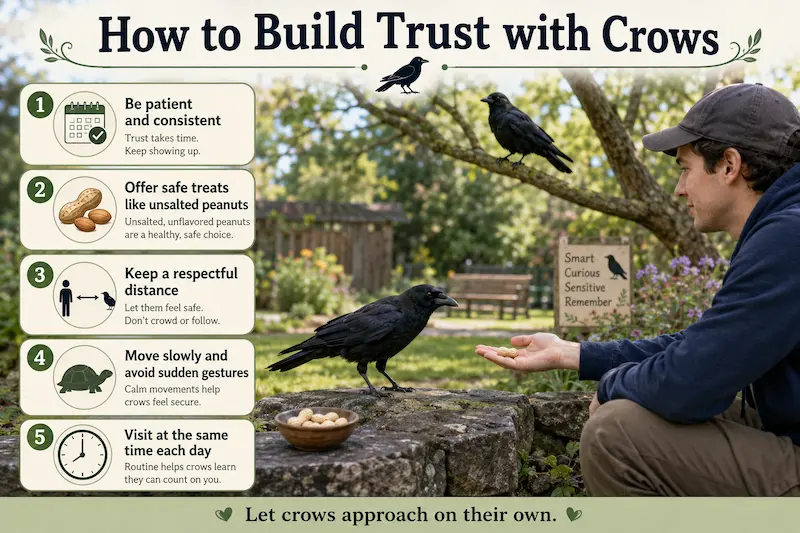
Trust is the most important factor in attracting crows. They do not immediately approach humans and will first observe behavior carefully.
Trust-building steps:
- Feed at the same time every day
- Stay calm and avoid sudden movements
- Never chase or try to touch them
- Place food and step away quietly
- Be consistent for weeks, not days
Crows can recognize individual human faces. If they associate you with safety and food, they will return regularly.
Signs That Crows Are Starting to Trust You
Many beginner guides ignore this part, but it is very important.
You will notice:
- Crows watching you from nearby trees or rooftops
- Loud calling when you arrive
- Reduced fear when you are present
- Earlier arrival before feeding time
- Repeated visits at the same time daily
In stronger relationships, crows may even leave small objects near feeding areas. This behavior is rare but has been observed in bonded crow-human relationships.
Create a Crow-Friendly Environment
To keep crows returning long-term, your environment should feel safe and predictable.
Helpful additions:
- Shallow water bowl for drinking and bathing
- Nearby trees, poles, or ledges for perching
- Quiet surroundings without loud disturbances
Water is especially important because crows use it for drinking, bathing, and sometimes softening food.
Why Routine Is So Important
Crows are highly intelligent and quickly learn patterns.
If you:
- Feed at the same time every day
- Use the same location
- Keep your behavior consistent
Then crows will begin to expect food and may even arrive before you place it.
Routine builds trust faster than quantity of food.
Why Crows Might Not Come (Common Reasons)
Sometimes people do everything right but still don’t see crows.
Common reasons include:
- Nearby food sources already available
- Breeding or nesting season changes behavior
- Presence of predators or loud disturbances
- Inconsistent feeding schedule
- Environmental changes in the area
Patience is essential—crow trust is slow but long-lasting.
Myth vs Reality About Crows
Myth 1: Crows love shiny objects
Reality: Most crows are cautious of new or unknown objects.
Myth 2: Crows randomly attack humans
Reality: Crows only become defensive if they feel threatened.
Myth 3: Crows always bring gifts
Reality: Gift-giving happens only in rare bonded relationships.
Myth 4: All crows behave the same
Reality: Behavior varies depending on region, family group, and experience.
Don’t skip reading it:
How to Preserve Flowers: 10 Easy Methods That Last
How to Sharpen Kitchen Knives Like a Pro (2026)
Do Crows Recognize Humans?
Yes, crows can recognize human faces and remember them for many years.
They can:
- Identify people who feed them
- Avoid people who threaten them
- Share this information with other crows
This is why consistency and calm behavior are extremely important.
Why Crows Sometimes Bring Gifts
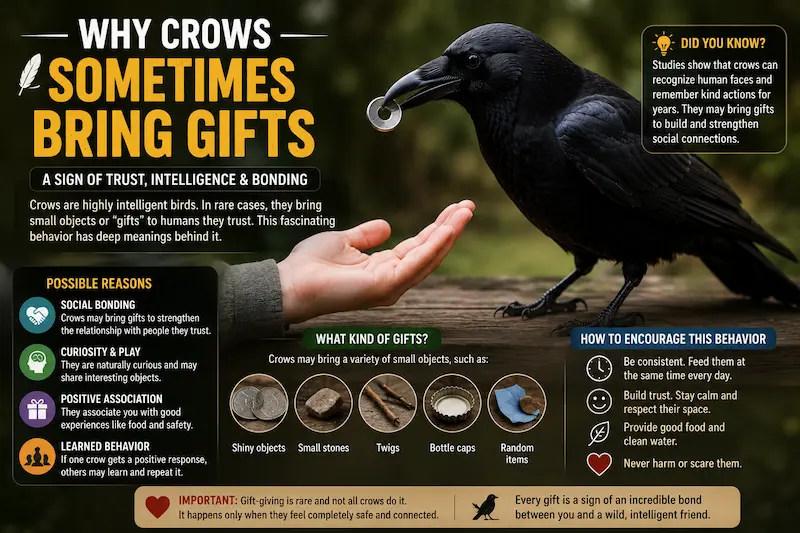
In rare cases, crows may leave small objects like stones, metal pieces, or other items.
This is believed to be linked to:
- Social bonding
- Curiosity and learned behavior
- Positive association with humans
However, not all crows do this, and it should not be expected.
Ethical Way to Attract Crows
Attracting crows should always be responsible.
Follow these rules:
- Do not overfeed or create dependency
- Keep feeding area clean
- Use natural, safe foods only
- Avoid disturbing neighbors
- Respect wildlife boundaries
The goal is coexistence, not control.
How Long It Takes to Attract Crows
Results vary depending on environment and consistency:
- Few days: crows may notice food
- 1–3 weeks: regular visits may begin
- 1 month or more: trust and recognition develop
Patience is key to success.
What is the best food to attract crows?
Unsalted peanuts in the shell are one of the best foods for attracting crows. Other good options include boiled eggs, dry pet food, corn, and small pieces of meat.
How long does it take to attract crows?
Most crows will notice a new food source within a few days. However, it can take one to three weeks of consistent feeding before they begin visiting regularly.
Can crows recognize human faces?
Yes. Studies have shown that crows can recognize and remember individual human faces. They can also remember whether a person has treated them positively or negatively.
Do crows bring gifts to people?
Sometimes. Some crows have been known to leave small objects such as buttons, beads, or shiny items for people who regularly feed them, although this behavior is not guaranteed.
Where should I place food for crows?
Place food in a quiet, open area where crows can easily see it and feel safe. Backyards, rooftops, balconies, and platform feeders are often effective locations.
What foods should I avoid feeding crows?
Avoid feeding crows chocolate, avocado, caffeine, salty foods, sugary snacks, and heavily processed foods. These can be harmful to their health.
Final Thoughts
Learning how to attract crows is not about shortcuts. It is about building a slow, respectful relationship with one of the most intelligent birds in nature.
If you provide consistent food, maintain a safe environment, and respect their behavior, crows will gradually learn to trust you. Over time, they may not just visit your space—they may remember you.
